From test pilots to submarine officers, Annapolis alumni bring engineering rigor and high stakes operational experience to NASA.

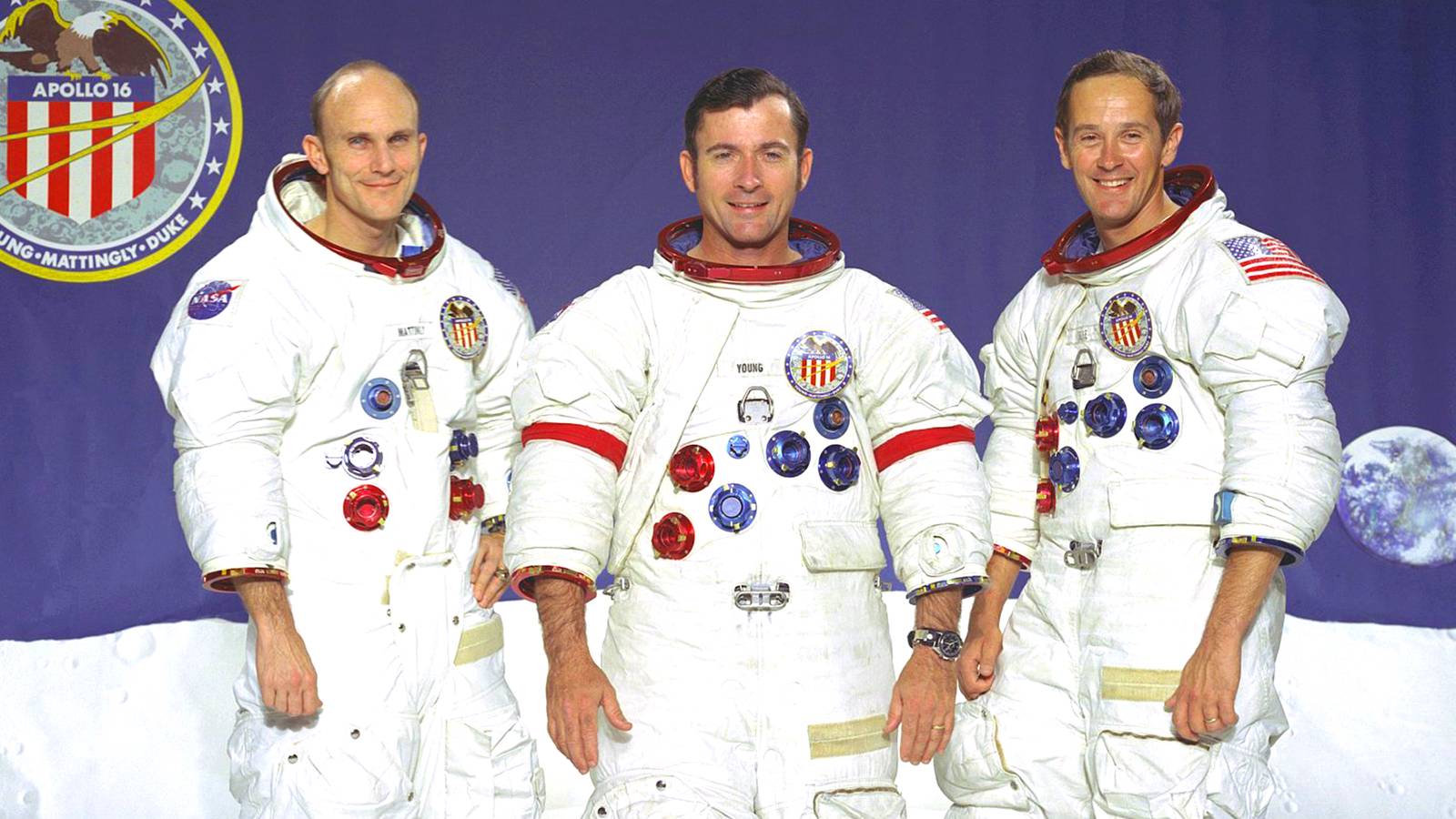
Before Charlie Duke walked on the moon, he helped talk someone else down to it.
Duke was sitting in Mission Control on July 20, 1969, serving as spacecraft communicator, or CAPCOM, as Neil Armstrong and Buzz Aldrin descended toward the lunar surface aboard Apollo 11.
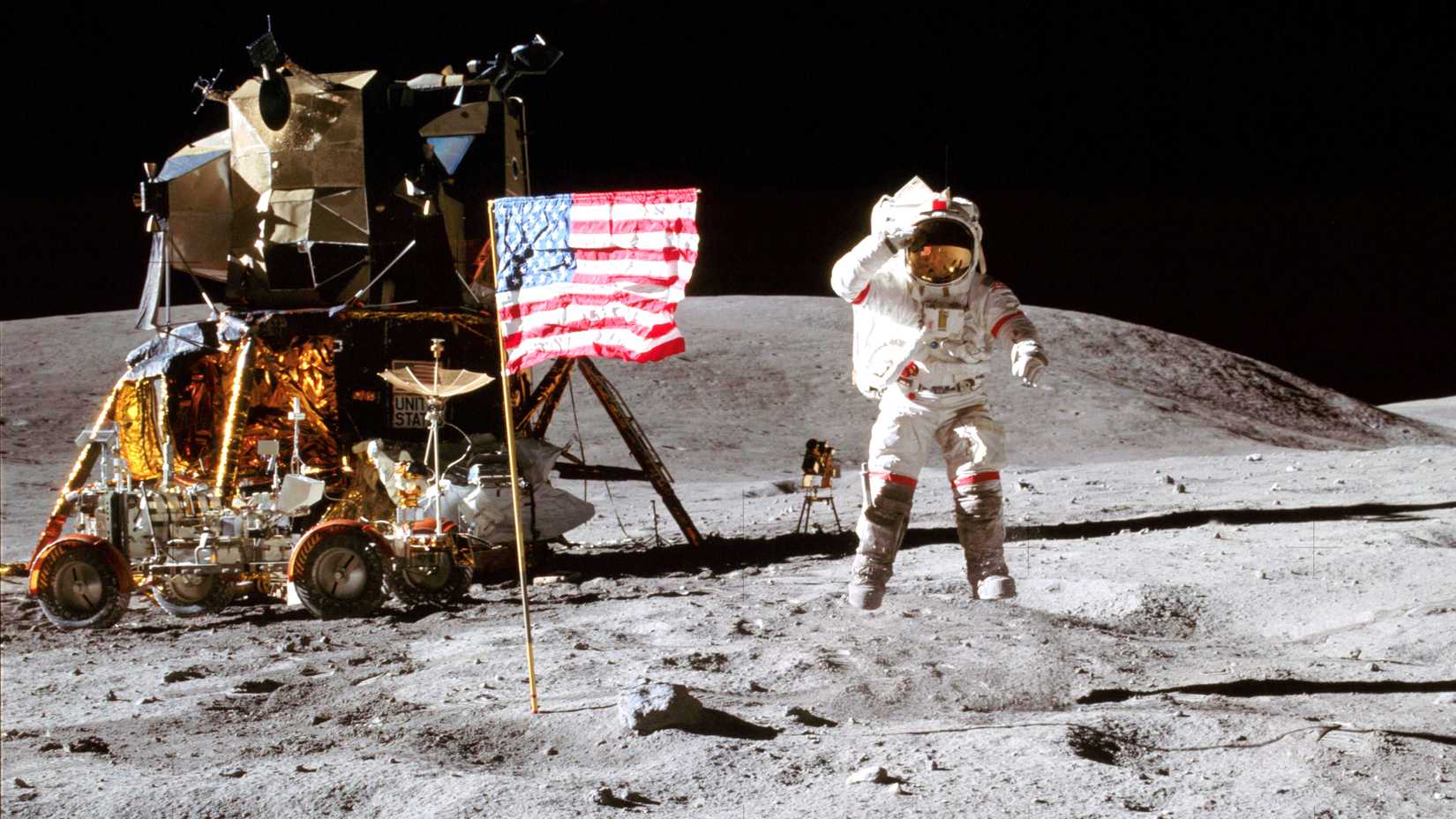
Less than three years later, Duke made the trip himself as lunar module pilot for Apollo 16. At 36, he became the 10th and youngest person to walk on the moon, a distinction he still holds.
His route to NASA began at the U.S. Naval Academy, where he graduated in 1957. Now the Naval Academy Alumni Association and Foundation is using Duke’s career to open a new podcast about a surprisingly large club: the 56 Naval Academy graduates who have become NASA astronauts.
Voices from Orbit launched Aug. 4 with Duke as its first guest. The monthly series is expected to feature moon walkers, space shuttle pilots, former NASA administrators and younger graduates involved in the next era of human spaceflight. Duke is one of three Naval Academy graduates who have walked on the moon.
Fifty-six astronauts is a remarkable return for one service academy. It also raises a pretty good question: Why Annapolis?
Part of the explanation can be found in what happens to midshipmen after graduation.
From Annapolis to NASA
The earliest Naval Academy astronauts came through a NASA pipeline built heavily around military aviation.
Alan Shepard, a 1944 Naval Academy graduate and Navy test pilot, became the first American in space aboard Freedom 7 in 1961. As NASA moved from the Mercury program toward Gemini and Apollo, military pilots with engineering backgrounds and experience testing high-performance aircraft were natural candidates for a job that involved climbing into experimental spacecraft atop enormous rockets.
Duke followed a slightly different branch of the same road. After Annapolis, he became an Air Force fighter pilot and test pilot before NASA selected him as an astronaut in 1966.
He worked on Apollo 10, served as CAPCOM for Apollo 11 and was the backup lunar module pilot for Apollo 13 before finally flying aboard Apollo 16 in April 1972.
NASA no longer requires astronauts to be military pilots. Flying experience is not required at all.
The agency’s current standards call for a master’s degree in a qualifying STEM field and at least three years of relevant professional experience. Pilots can qualify through flight experience, and completing a nationally recognized test-pilot school can satisfy NASA’s advanced-degree requirement.
NASA also looks for leadership, communication skills and an ability to work on a team. That leaves plenty of room for Naval Academy graduates who never spent their careers in a fighter cockpit.
Kayla Barron graduated from Annapolis in 2010 with a degree in systems engineering and became one of the first women commissioned into the Navy’s submarine community.
She completed three strategic deterrent patrols aboard the ballistic missile submarine USS Maine before NASA selected her for its 2017 astronaut class. Barron later spent nearly six months aboard the International Space Station during NASA’s SpaceX Crew-3 mission.
Jack Hathaway, another Naval Academy graduate, joined NASA’s 2021 astronaut class after a Navy career that included flying the F/A-18 and attending the U.S. Naval Test Pilot School.
The newest connection is Rebecca “Becky” Lawler, a 2009 Naval Academy graduate selected for NASA’s 2025 astronaut candidate class. Lawler earned her degree in mechanical engineering, became a Navy pilot and graduated from the Naval Test Pilot School. NASA says she logged more than 2,800 flight hours in more than 45 aircraft before joining the astronaut candidate program.
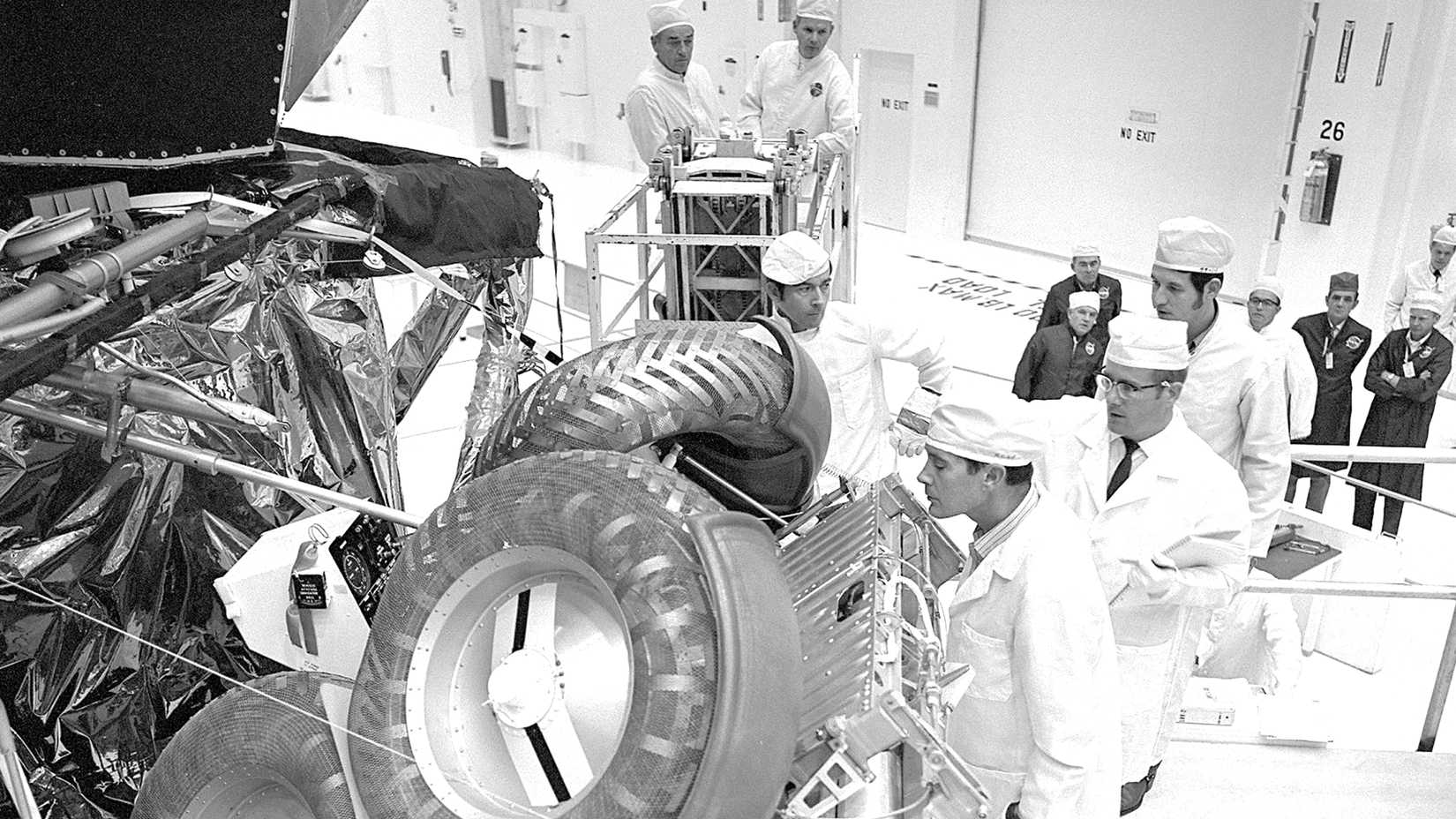
The Engineering Pipeline Runs Deep
The Naval Academy did not even begin offering academic majors until 1968. Its aerospace engineering program says that 39 Academy graduates have become astronauts since then, including 16 graduates of the Aerospace Engineering Department itself.
That helps explain why the connection continued long after NASA stopped filling its astronaut office primarily with test pilots.
Annapolis produces engineers who then spend years operating complicated machines in places where mistakes carry consequences. Some go into aviation. Others serve aboard submarines or work in technical specialties before pursuing graduate degrees. NASA’s astronaut requirements happen to reward much of that background.
The old test-pilot route hasn’t disappeared, either. NASA says flying experience is optional, but notes that the high-performance jet time used to qualify as a pilot is usually accumulated through military service. Astronaut candidates still train in T-38 jets after selection.
The result is a pipeline that has survived several generations of American spaceflight.
Naval Academy graduates flew during Apollo and commanded space shuttles. Suni Williams, Class of 1987, spent 608 days in space across three missions before retiring from NASA in December 2025 after 27 years with the agency.
Barron, Hathaway and Lawler represent what comes next.
NASA’s 2025 astronaut candidates are training for assignments that could include the International Space Station, commercial stations and future missions beyond low Earth orbit. The agency says astronauts from the new class could eventually support missions to the moon and Mars.
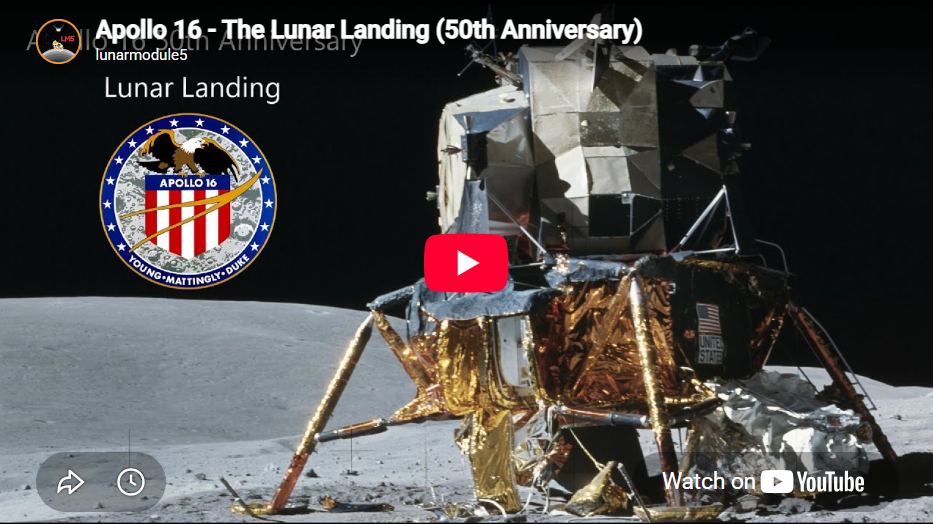
Apollo 16 – The Lunar Landing (50th Anniversary)
That is where Voices from Orbit plans to take the story as well. The Alumni Association says future episodes will move from Apollo veterans into the shuttle era and eventually to graduates preparing for whatever follows.
Starting with Duke makes sense as he graduated from Annapolis before the school had an aerospace engineering major, helped guide Apollo 11 to the moon from Houston and then left his own bootprints there in 1972.
More than half a century later, the Naval Academy is still sending graduates toward NASA. The spacecraft have changed, but the pipeline from Annapolis has largely remained the same.